Tonkotsu Ramen Science: The Art of Pork Bone Extraction

October 10, 2025

There’s a certain magic to a perfect bowl of tonkotsu ramen. It arrives steaming, the broth a creamy, opaque white, promising a depth of flavor that feels almost primal. That first spoonful is a revelation—impossibly rich, savory, and silky, with a profound pork essence that coats your palate. This isn’t just soup; it’s a culinary achievement, a liquid treasure born from humble pork bones and the relentless pursuit of perfection.

This legendary pork bone broth originated in the bustling food stalls of Fukuoka, Japan, and has since captivated food lovers worldwide. But what exactly transforms simple bones and water into this luxurious, emulsified liquid? In Asian cuisine, broths are essential components that form the foundation of many soups, such as those found in Chinese soups, where clarity and depth are prized. However, the science behind tonkotsu ramen sets it apart, creating a uniquely rich and creamy result. The answer lies in tonkotsu ramen science—a symphony of chemistry, physics, and culinary artistry.

Tonkotsu Ramen Science: The Heart of Flavor

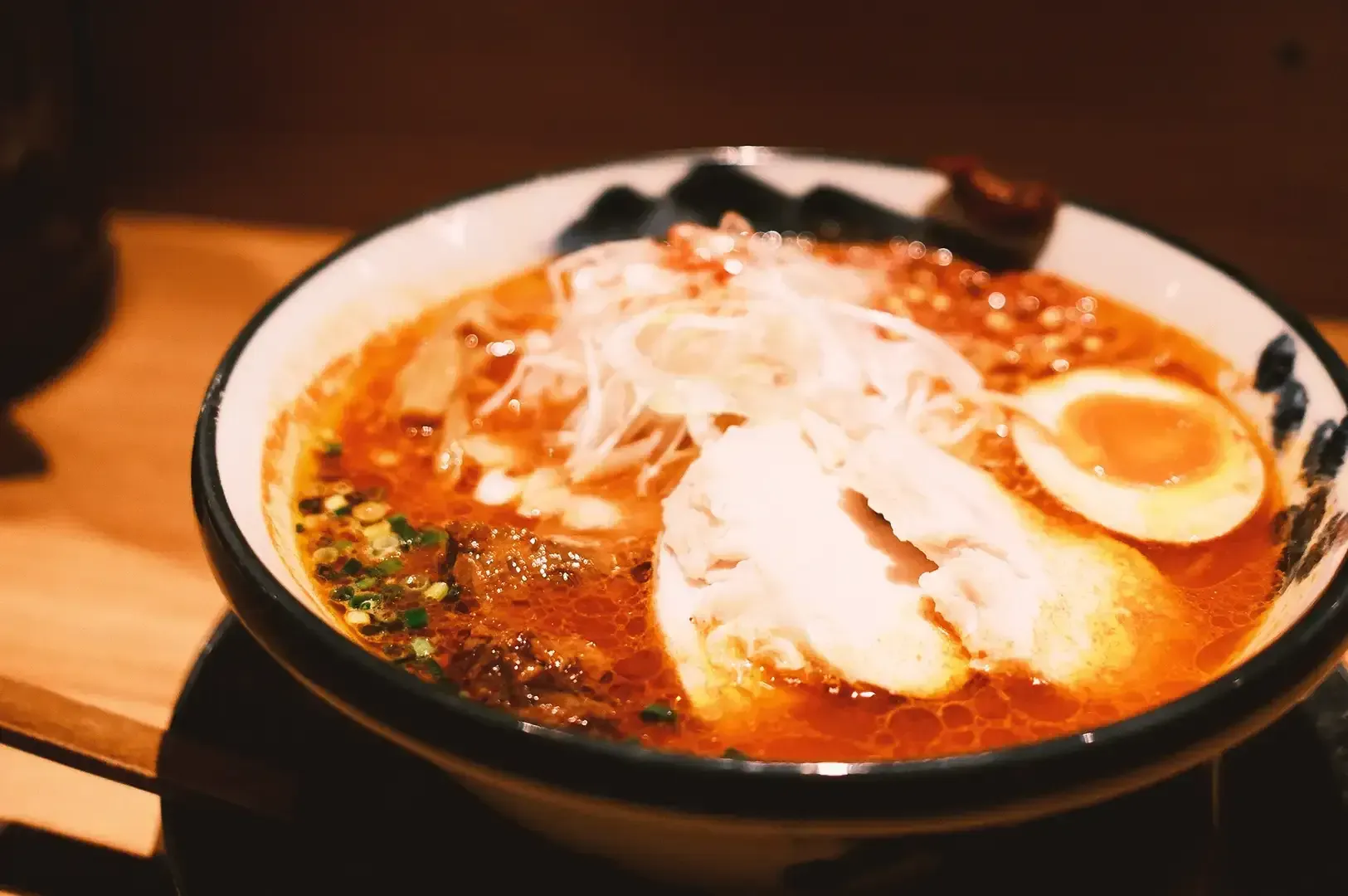
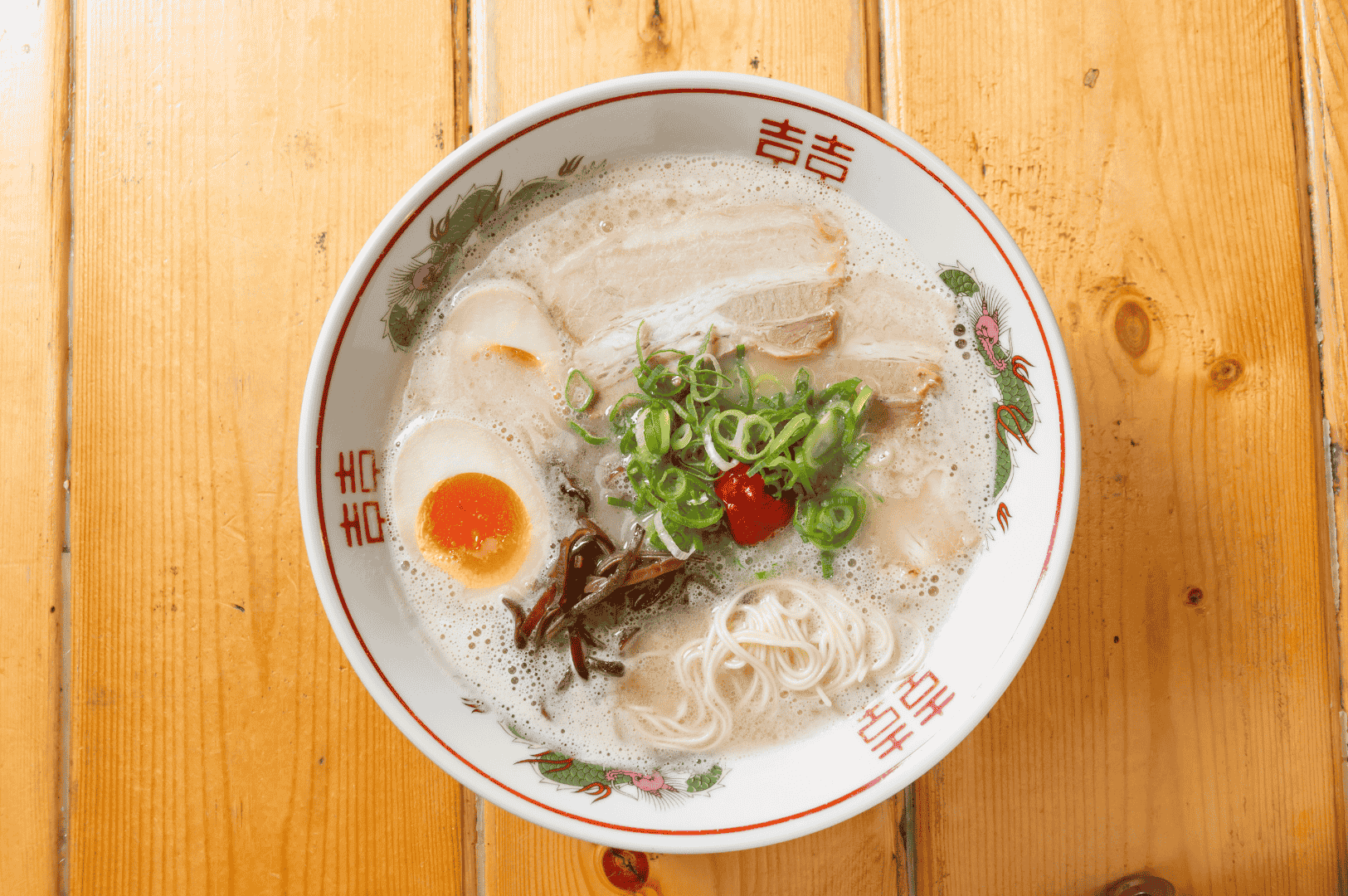
A bowl of tonkotsu ramen rests on a wooden surface, its creamy pork bone broth cradling thin noodles, tender chashu slices, a soft-boiled egg with molten yolk, and a dollop of spicy red paste. Garnished with green onions and dark mushrooms, the dish is served in a traditional bowl adorned with red Chinese characters—capturing the final, flavorful result of meticulous bone extraction and slow emulsification.

At its core, tonkotsu ramen broth is not a traditional clear bone broth. A French stock aims for clarity, carefully skimming impurities. Tonkotsu does the opposite, creating a thick, opaque emulsion of fat, gelatin, and water.

If you want to make authentic tonkotsu ramen at home, following a reliable recipe is essential, as it serves as the foundational guide to achieving the right texture and flavor.

The story goes that in Hakata, a chef left a pot of pork bones boiling too long. Instead of a ruined stock, he discovered a creamy, rich pork bone soup—what we now know as Hakata-style Japanese ramen.

To understand this magic, we must look at three processes: collagen extraction, emulsification, and the Maillard reaction.

Understanding the science behind tonkotsu ramen helps home cooks get a good deal of flavor and quality from their efforts. There are many recipes for ramen, each with its own approach to the science of broth making.

Choosing the Right Pork Bones

The foundation of any great tonkotsu ramen is the pork bones you choose. For a truly rich and flavorful broth, seek out pork neck bones or bones packed with marrow, as these provide both depth of flavor and essential nutrients. Combining different types of bones—such as neck bones, rib bones, and vertebrae—can yield a more complex and satisfying broth.

When shopping, ask your local butcher for bones with plenty of connective tissue, since these are high in collagen and will help create that signature creamy tonkotsu broth. If you’re using leftover bones, be sure to clean and dry them thoroughly before cooking to ensure the best flavor.

For the ultimate bowl, prioritize pig trotters or pork neck bones, as they break down beautifully during cooking, infusing your broth with more flavor and a luxurious, velvety texture.

Preparation of Pork Bone

Proper preparation of your pork bones is key to achieving a clean, flavorful broth. Start by rinsing the bones under cold water to wash away any surface impurities. Next, blanch the bones by placing them in a pot of boiling water for several minutes—this step helps remove coagulated blood and excess fat that can cloud your broth and affect its taste.

After blanching, drain the bones and rinse them again under cold water, then pat them dry with paper towels. For an even cleaner broth, consider soaking the bones in cold water for a few hours before cooking; this extra step draws out any lingering impurities, resulting in a purer, more refined flavor.

Taking the time to properly prepare your pork bones ensures that your final broth is free from unwanted flavors and excess fat, setting the stage for a delicious bowl of ramen.

Using Special Equipment

Crafting a rich and flavorful pork bone broth for tonkotsu ramen requires the right equipment. A large stockpot with a heavy bottom is essential for simmering pork bones over a long period, allowing the flavors and collagen to fully extract.

To achieve a smooth, creamy tonkotsu broth, you’ll also need a fine mesh strainer to remove any solids and ensure a silky texture. If you’re short on time, an Instant Pot or pressure cooker can dramatically speed up the process, extracting maximum flavor and gelatin from the bones in just a few hours.

Alternatively, a slow cooker or Dutch oven can be used to gently simmer the bones on low heat, resulting in a deeply flavorful bone broth. For the best results, use a large stockpot to maintain a steady simmer and allow the pork bones to cook for an extended period, unlocking the full potential of your ramen broth.

Pork Bones and Collagen Extraction

The secret to tonkotsu ramen broth’s body lies in collagen. Found abundantly in pork bones—especially femur and neck bones—collagen breaks down during a long boil into gelatin. While pork bones are traditional for tonkotsu, some ramen broths use chicken bones, boiling down chicken backs and carcasses to extract flavor and collagen for a creamy, opaque broth.

  • The Process: Over hours of cooking, tough connective tissue softens into gelatin as the bones cook, extracting not only collagen but also deep meat flavors from the bones.
  • The Result: When cooled, a well-made broth solidifies into a jiggly block, proof of successful collagen extraction.

As the broth cooks over time, it develops its signature silky texture and rich, layered flavor.

This transformation is why pork bone broth feels so silky and coats your lips with richness.

Tonkotsu Ramen and Emulsification

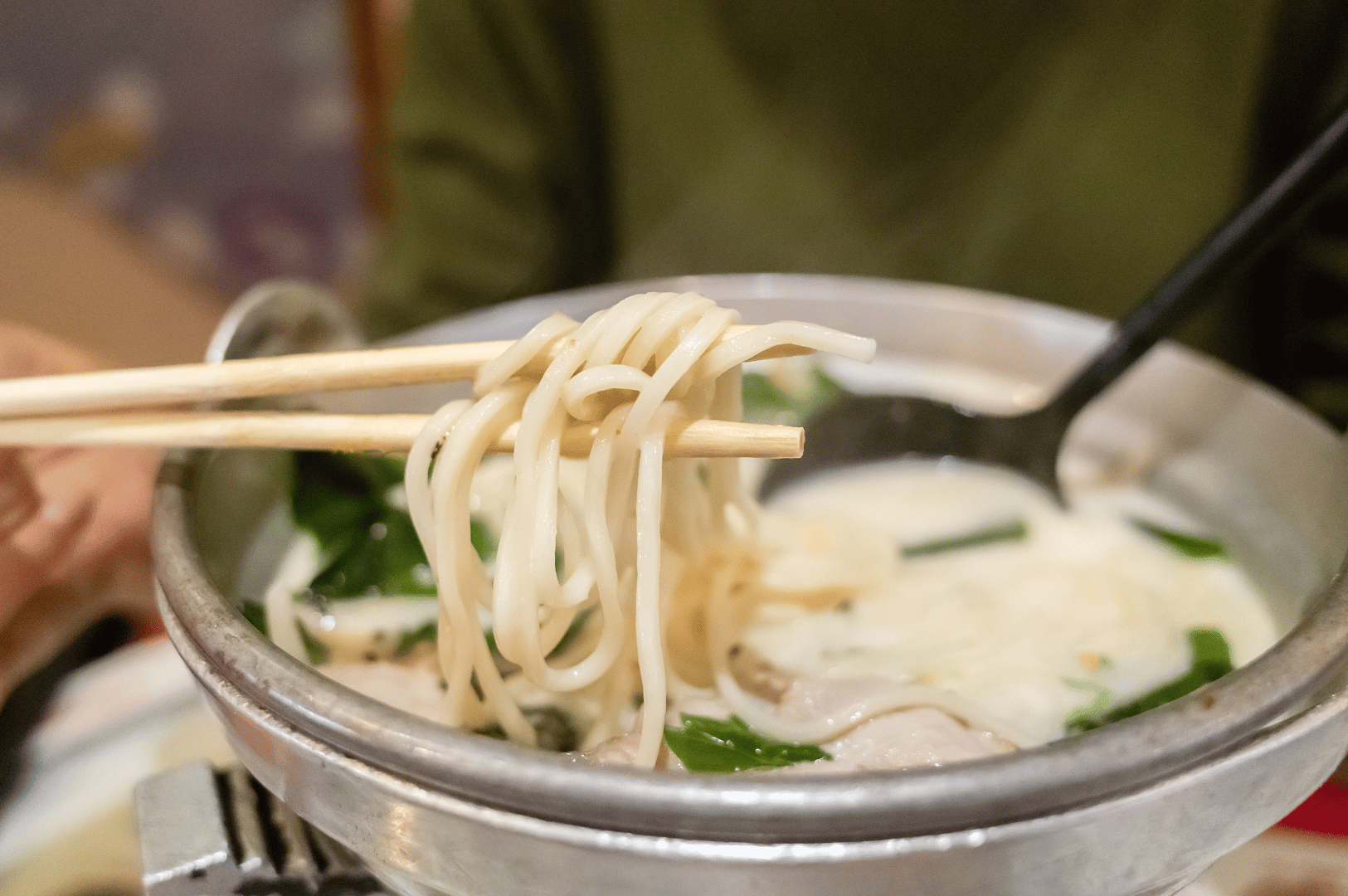
A close-up of creamy tonkotsu ramen served in a metallic bowl, with noodles lifted mid-air by wooden chopsticks, revealing their silky texture. Green vegetables and tender meat pieces float in the milky broth, while a black spoon rests inside—evoking the warmth and tactile pleasure of a dish born from hours of bone simmering and emulsification.

What separates tonkotsu from a simple bone broth or ramen broth is emulsification.

  • The Process: A vigorous rolling boil breaks fat into microscopic droplets.
  • The Stabilizer: Gelatin molecules from pork bones keep these droplets suspended.
  • The Result: A creamy, opaque pork bone soup—the signature look of tonkotsu, where the fat transforms into a liquid form that enriches the broth.

Controlling the sugar content is also important for achieving the ideal flavor balance in the emulsified broth.

Without emulsification, you’d have a thin broth with fat floating on top, not the luscious ramen broth we crave.

Building Flavor in Tonkotsu Ramen Broth

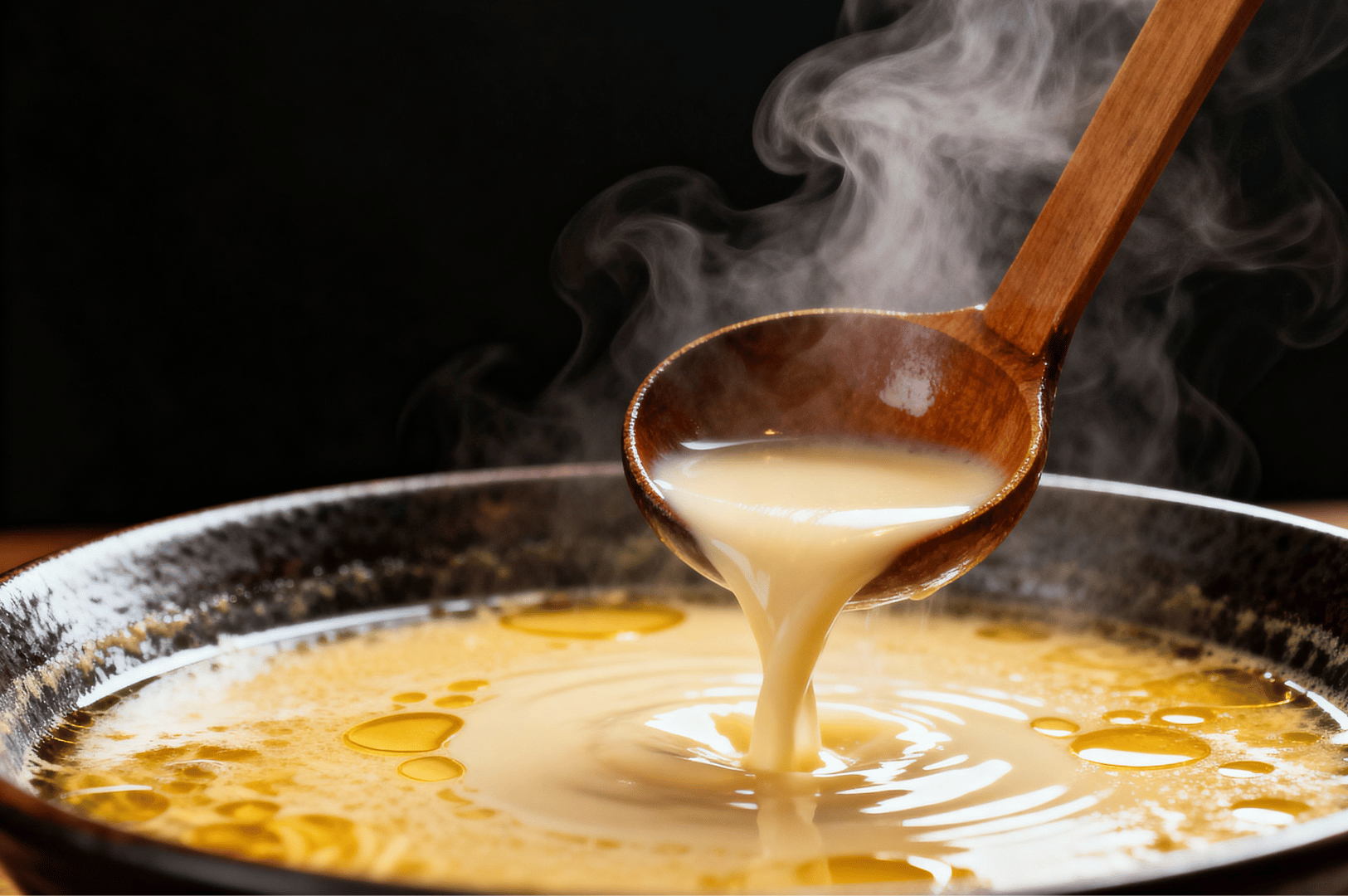
Steam curls upward from a ladle lifting creamy tonkotsu broth, its pale yellow hue and glistening droplets of fat revealing hours of slow bone emulsification. Set against a dark backdrop, the warmth and richness of the soup take center stage—evoking the quiet alchemy of collagen breakdown and the comforting depth of flavor born from patient extraction.

Beyond texture, great tonkotsu ramen broth needs deep flavor. That’s where the Maillard reaction comes in. Chefs roast or char bones before boiling, unlocking nutty, roasted notes.

  • Ingredients: Garlic, ginger, onions, bay leaves, and ginger slices roasted alongside the bones add even more depth.
  • After roasting, add apple cider vinegar during the simmering process to enhance mineral extraction and balance acidity.
  • Impact: This layering creates umami complexity that boiling alone cannot achieve. After roasting, reduce heat to a gentle simmer or medium low to develop flavor without overcooking.

This step makes the difference between a flat bone broth and a ramen broth bursting with character.

Japanese Ramen: Tradition Meets Modern Science

Traditional Method

In Fukuoka, chefs keep a massive stock pot at a furious boil for 12–18 hours. The pork bones break down fully, producing a cloudy, collagen-rich tonkotsu ramen broth.

Modern Method

Many ramen shops—and home cooks—use modern tools:

  • Instant Pot / Pressure Cooker: By raising water’s boiling point, collagen extraction happens in just a few hours. This is a game-changer for making pork bone broth at home.
  • Two-Pot System: One pot for gentle simmering, another for emulsification at high heat, later combined for balance.

Both methods showcase how Japanese ramen continues to evolve.

Ramen Broth at Home vs. in Shops

In Ramen Shops

  • Scale: Dozens of kilograms of pork bones in giant pots yield unmatched intensity.
  • Bone Blends: Femurs for marrow, trotters for collagen, neck bones for meatiness.
  • Equipment: Custom burners keep broth at relentless high heat.

At Home

  • Sourcing: Ask your local butcher for the right cuts.
  • Cooking Gear: A large stock pot or instant pot is essential.
  • Process: Blanch bones first to remove impurities, then boil hard for hours.

Though smaller in scale, a home-cooked pork bone soup can rival restaurant quality with patience.

Serving Suggestions

Pork bone broth is a versatile base that elevates a wide range of dishes. Enjoy it as a comforting soup on its own, or use it as the foundation for classic tonkotsu ramen or even a rich chicken broth.

For a satisfying meal, ladle the hot broth over ramen noodles and top with green onions, tender pork belly, or a soft-boiled egg. Enhance the flavor with a splash of soy sauce, a drizzle of black garlic oil, or your favorite seasonings. Straight noodles work beautifully in tonkotsu ramen, soaking up the creamy broth and delivering a true Japanese ramen experience.

You can also use pork bone broth as a cooking liquid for rice, vegetables, or other soups, adding depth and richness to every bite. However you serve it, a well-made pork bone broth brings warmth, flavor, and a touch of culinary magic to your table.

Common Challenges When Making Pork Bone Soup

  • Broth Isn’t Creamy: Heat too low; you need a rolling boil.
  • Broth Is Gray: Skipped blanching; always clean bones in cold water.
  • Too Thin: Cooked too short; pork bones need a long period to release collagen.

A fine mesh strainer at the end ensures a smoother ramen broth without grit.

Regional Variations of Japanese Ramen

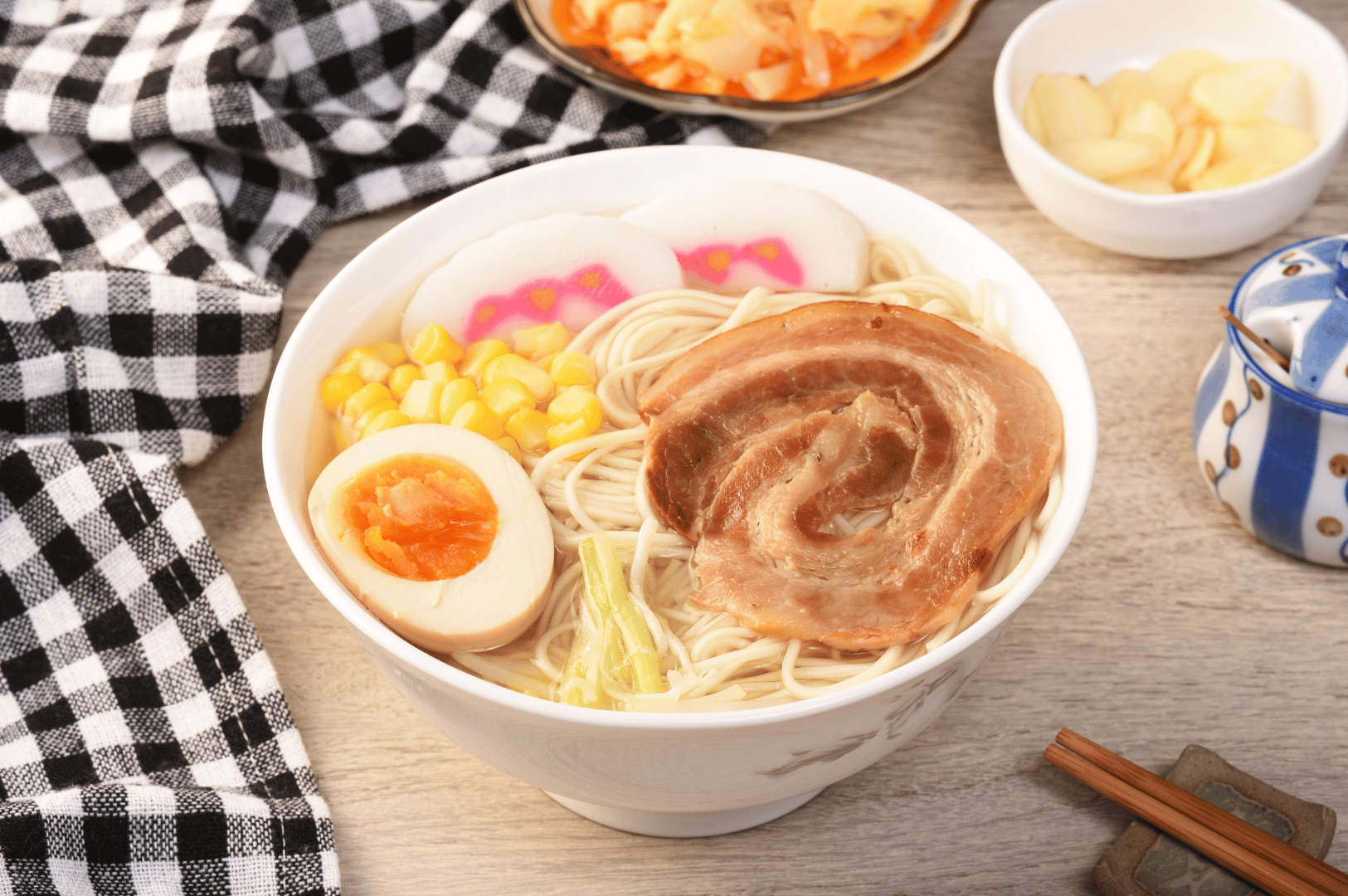
A richly garnished bowl of shio ramen sits on a wooden table, topped with braised chashu, molten-yolk egg, sweet corn, narutomaki fish cakes, and shredded green onions. Surrounding side dishes—pickled vegetables, potato chips, and a ceramic condiment jar—add texture and cultural depth, while a checkered cloth and resting chopsticks evoke the warmth of a home-cooked feast born from scientific precision and soulful tradition.

While Hakata-style tonkotsu dominates, other Japanese ramen traditions shine:

  • Shio Ramen: Shio ramen is salt-based and is often blended with chicken or seafood stock.
  • Shoyu Ramen: Shoyu ramen is soy sauce–seasoned and lighter than tonkotsu.
  • Double Broth: Double broth is a mix of pork bone broth and chicken stock for balance.

These regional variations prove that while tonkotsu ramen broth is iconic, it’s part of a broader ramen universe.

Tonkotsu Ramen: Where Science Meets Soul

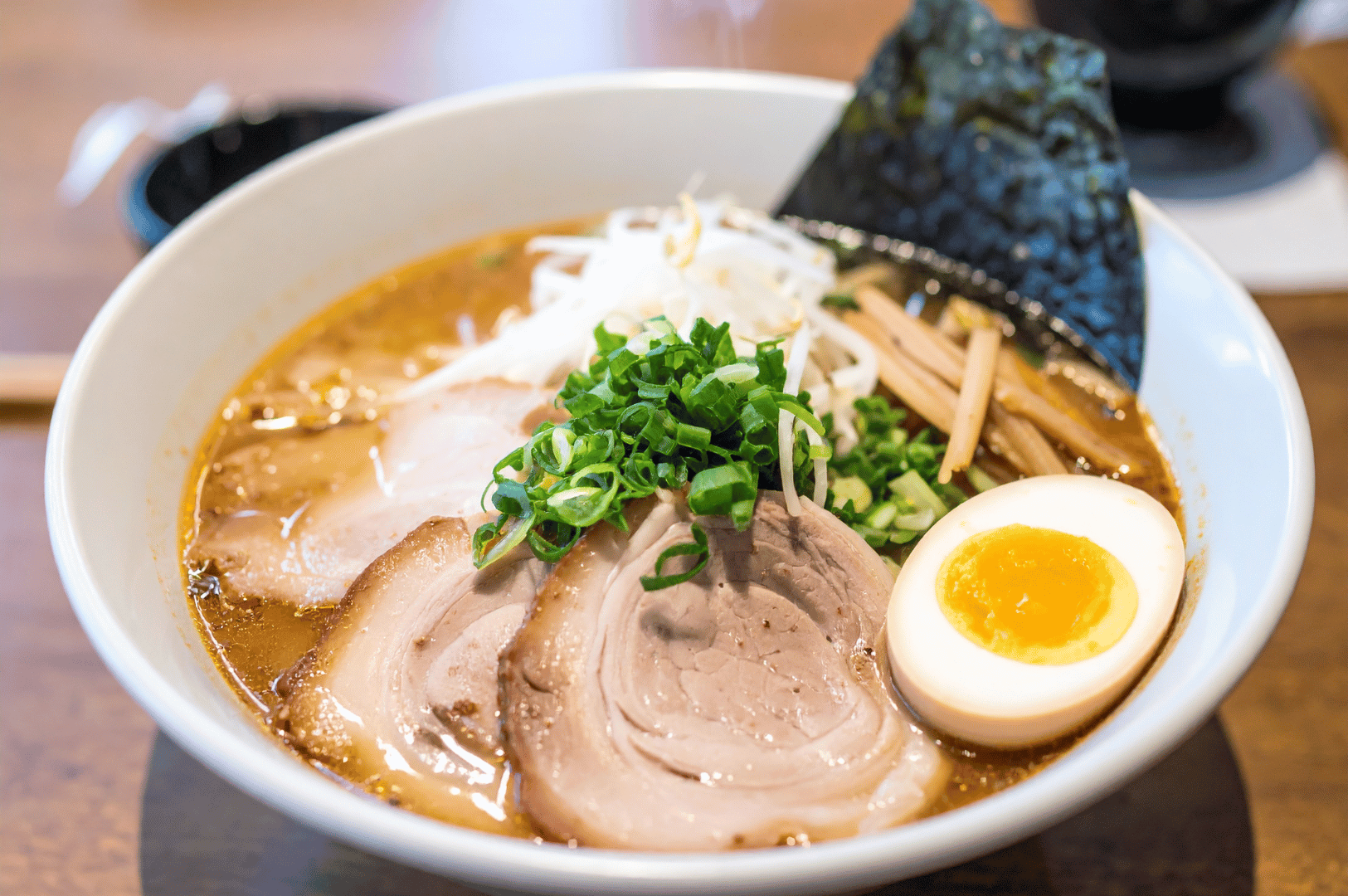
A white bowl of tonkotsu ramen showcases a rich, golden broth layered with chashu pork, soft-boiled egg, bean sprouts, bamboo shoots, green onions, and a crisp sheet of nori. The ingredients are artfully arranged, highlighting the harmony between texture, flavor, and visual appeal—an elegant finale to the scientific precision and cultural depth behind pork bone extraction.

Tonkotsu ramen science reveals that this isn’t just a dish—it’s a process where collagen, fat, and fire transform pork bones into liquid gold. Every steaming bowl of ramen represents history, chemistry, and passion.

So next time you enjoy hot noodles in a creamy ramen broth, notice the silky body and the way it clings to your lips. That’s not just fat—it’s the good stuff: gelatin, emulsification, and craft, simmered into one unforgettable bowl of tonkotsu ramen.

Recent Posts

Exterior daytime photo of a curved glass building, identified as a Capitaland mall.
By Jillian Gaza December 5, 2025
Explore the top ramen spots in Tampines, from rich broths to unique toppings. Join us on this delicious culinary journey and find your next favorite bowl!
Close-up of a steaming bowl of shoyu or miso ramen, topped with a perfectly cooked soft-boiled egg.
By Jillian Garzia December 1, 2025
Discover the best ramen spots in Jurong East, featuring delicious flavors and varied options. Dive into our guide for your next tasty adventure!
Overhead view of a Japanese tsukemen ramen takeout kit in a white styrofoam container with noodles.
By Jillian Gaza November 28, 2025
Craving ramen in Singapore? Discover the best delivery options to satisfy your noodle cravings. Dive into our guide and order your favorite bowl today!
Extreme close-up of a steaming bowl of ramen with a rich broth, two slices of chashu pork.
By Jillian Gaza November 24, 2025
Discover the best ramen spots in Tanjong Pagar where you can savor delicious bowls for under $15. Dive into our guide and satisfy your cravings!
Close-up of a steaming bowl of traditional Japanese ramen with chashu pork slices.
By Best Ramen Team November 21, 2025
Discover the top instant noodles in Singapore to satisfy every craving. From classic flavors to unique options, find your perfect bowl. Read more now!
Extreme close-up of a bowl of creamy Tonkotsu ramen, showing thick noodles
By Jillian Gaza November 17, 2025
Discover the top spots for tonkotsu ramen in Singapore. Savor rich flavors and hearty bowls you won't want to miss. Read on for our must-try picks!