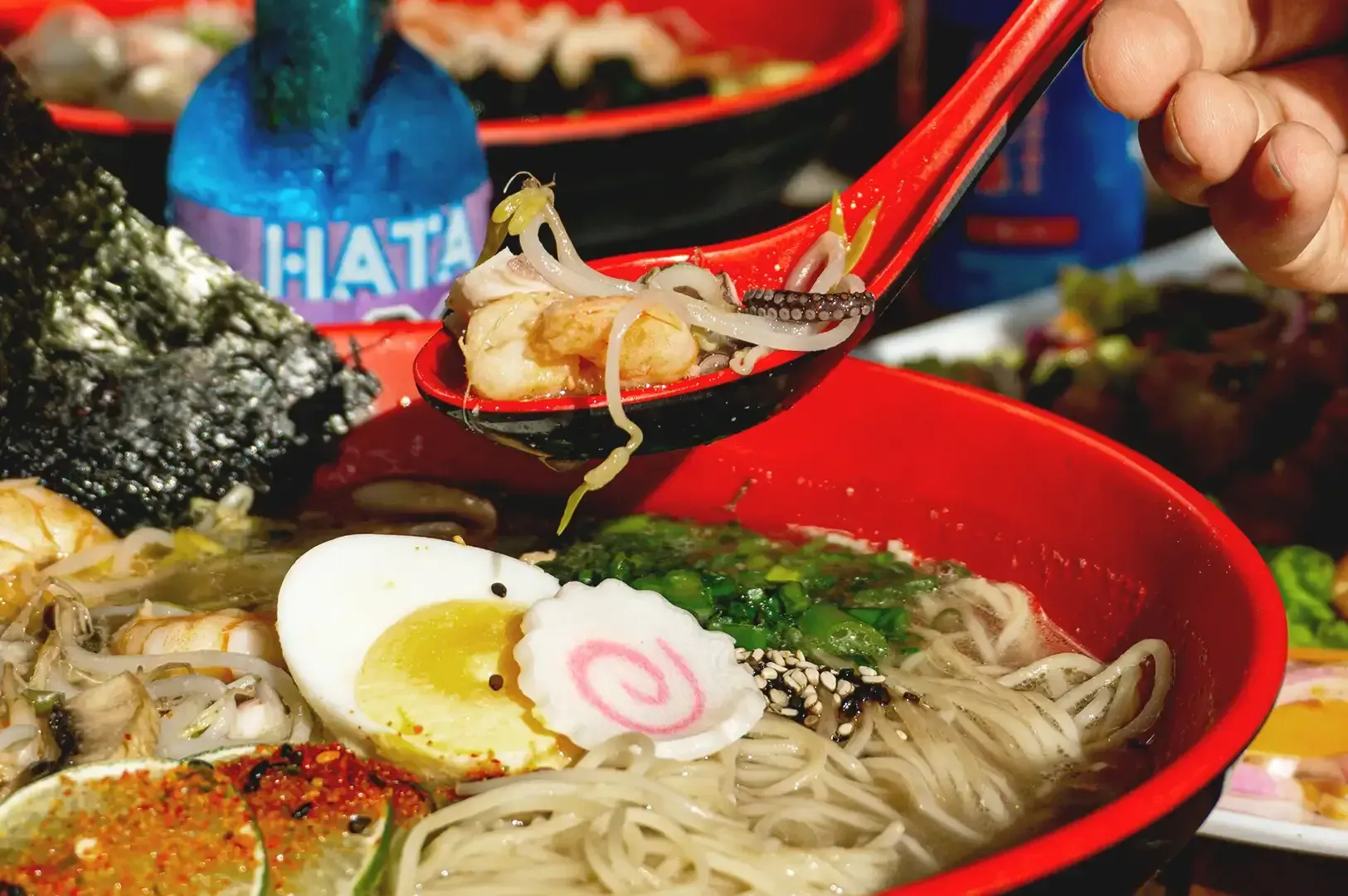
I still remember the bowl that broke my trust. It arrived looking dangerous, a slick of glossy red oil pooling across the surface, catching the light like it wanted to intimidate me. The chashu sat beneath a vivid crimson coat, the noodles were buried in it, and the whole thing looked like a dare I was about to lose.
The aroma promised so much. That toasty, chilli-tinged scent curled up with the steam, and I braced myself for a real fight. Then I took my first sip, and nothing happened. Just warmth, colour, and a faint tingle that faded before I'd even finished chewing.
Here's my honest frustration, one
ramen lover to another: too many places are selling red, not heat. That vivid oil looks the part, but looking spicy and tasting spicy are two very different things.
The broth underneath was thin and timid, the kind that coats your tongue without leaving any impression. The noodles carried plenty of that red sheen but almost none of the burn, and the toppings just sat there, coated in colour rather than flavour. It was spice as decoration, heat staged for the photo instead of the palate.
Let me be fair, though. Chilli oil isn't a con by itself. When it's made with care, it brings real depth: toasted aromatics, a nutty richness, a slow warmth that builds and lingers. That's flavour doing its job. The problem is when the oil is all surface, floated on top to signal excitement it never delivers.
Genuine spicy
ramen, to me, works the heat into the whole bowl. The chilli lives in the broth, not just on it. It arrives in gentle waves, layered with aroma and balance, complementing the soup instead of drowning it. You reach for water, then oddly, you reach for another mouthful. That progression is the point.
I know spice tolerance is deeply personal. Some people genuinely love an oil-heavy, mellow bowl, and there's nothing wrong with that. What bugs me isn't the oil itself; it's the promise of fire that turns out to be a costume.
A truly good spicy bowl should offer more than a dramatic colour. It needs balance, depth, that gradual heat that respects both the broth and the person eating it.
The best spicy ramen I've had didn't look half as fierce as the imposters, but it stayed with me long after the bowl was empty, a slow, satisfying burn woven into every element, from the broth to the noodles to the last topping I fished out at the bottom.
So here's my little challenge to the kitchens out there: build the heat in, don't just paint it on. Give us spice with a story, not a stunt.
And to you, fellow slurper: what makes spicy ramen genuinely good in your book? Tell me about the bowl that actually delivered, because I'm always hunting for the real thing.