What Are the Best Vegetables for Ramen? Your Complete Guide to Ramen Vegetables
For a long time, vegetables were an afterthought in my ramen. I'd cook the noodles, pour in the broth, and toss a handful of raw greens into the pot at the last second. Then I'd wonder why the soup tasted weaker and the greens tasted like nothing.
When I started treating vegetables for ramen as part of the bowl, everything changed. The broth stayed bold. The textures got more interesting. And a quick weeknight dinner started to feel like a real meal.
If you cook
ramen at home in Singapore, you already have an advantage. Wet markets and supermarkets here stock leafy greens, mushrooms, and sprouts all year round. This guide covers the
vegetables I think work best, how to prep each one, and how to build a vegetarian ramen noodle bowl that doesn't feel like it's missing anything.
Why Vegetables for Ramen Matter More Than You Think
Ramen is all about balance. A rich miso broth or a salty soy base needs something fresh, crunchy, or slightly sweet to cut through it. That's the job ramen vegetables do.
I've found that the best bowls use a mix of cooked veggies and raw vegetables. Some soften into the hot broth, while others keep their crunch. That contrast is what keeps you going back for another slurp.
There's a practical side too. Adding vegetables turns a quick bowl of instant ramen into something more filling and nutritious, without much extra work or cost. Plus, the nutrition calories you get from a bowl loaded with veggies make it an amazing recipe for health-conscious eaters..
B. Miso Ramen: Matching Bold Flavours With Smoky Seafood
Miso ramen brings a different kind of depth. Fermented soybean paste gives the broth a savoury, slightly salty complexity, layered with stronger umami notes and often a swirl of chili oil or a base of soy sauce. It is hearty and full-bodied, the sort of bowl that lingers.
The Best Vegetables for Ramen and How to Prep Each One
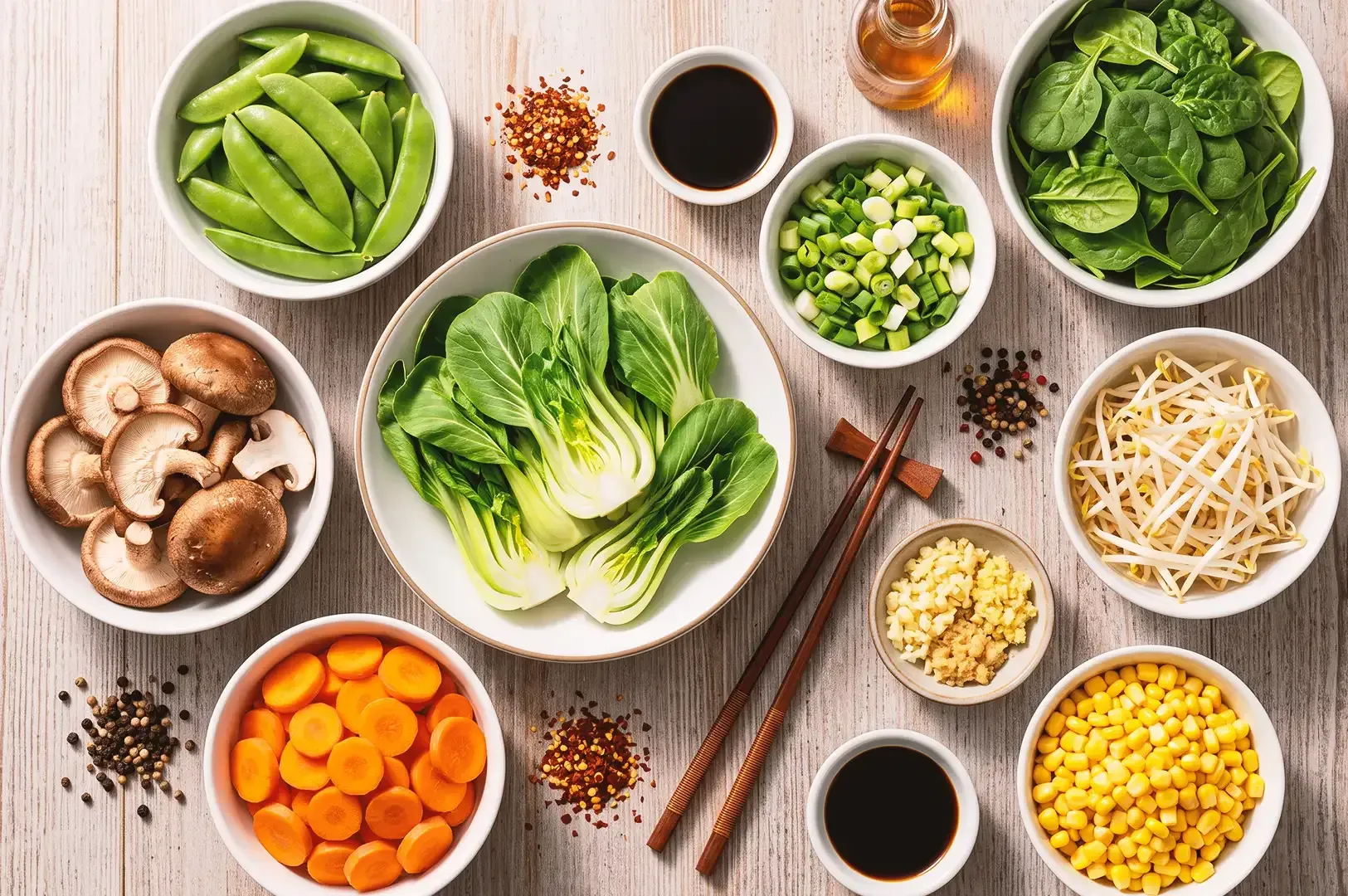
Here are my favorite ramen vegetables, plus how I handle each one so it actually tastes delicious in the bowl.
Bok Choy and Baby Bok Choy
If I could only pick one vegetable, it would be bok choy. The stems stay juicy and crisp, while the leaves turn silky in hot broth.
I prefer baby bok choy because you can halve it lengthwise and blanch it whole. It looks beautiful in the bowl and cooks in about a minute. With larger bok choy, separate the stems from the leaves and give the stems a head start, since they take longer to soften.
Shiitake Mushrooms
Shiitake mushrooms bring deep, earthy umami that makes any broth taste richer. You can slice fresh shiitake and sauté them in a little avocado oil until golden, or simmer them right in the broth.
I think mushrooms are the secret to great vegetarian ramen. They add the savory depth you'd usually get from meat-based stock.
Pro tip: Even if someone at your table doesn't love mushrooms, simmer a few in the broth anyway for flavor, then take them out before serving. You keep the umami and skip the complaints.
Snow Peas
Snow peas add sweetness and a satisfying snap. Trim the ends, then blanch them for 30 to 60 seconds or slice them into thin strips and add them raw. They're one of the easiest ways to bring color and crunch to your bowl.
Scallions
Scallions belong in almost every ramen bowl. I slice them thinly and use the white parts in the cooking, then save the green parts for garnish. Those reserved green parts add a fresh, mild bite that brightens the whole bowl right before you eat.
Bean Sprouts
Bean sprouts add excellent crunch. For the safest preparation, cook them thoroughly before serving. Raw or lightly cooked sprouts carry a higher food-safety risk, particularly for pregnant people, young children, older adults and anyone with a weakened immune system.
Baby Spinach
Baby spinach is the lazy cook's best friend. Put a handful at the bottom of your bowl, then ladle the hot broth over it. It wilts in seconds, no extra pot needed. Kale works too, though it needs a little longer.
Corn Kernels
Sweet corn kernels add little pops of sweetness that pair especially well with miso broth. Canned or frozen corn is perfectly fine. I like to warm the kernels in a pan with a touch of butter or oil for extra flavor.
Carrots and Cabbage
Thinly sliced carrots add color and gentle sweetness. Shredded cabbage softens into something tender and slightly sweet when cooked. Together, they're the base of one of my favorite instant ramen upgrades, which I'll walk you through below.
A Few Wildcards Worth Trying
Once you've got the basics down, have some fun. Zucchini, broccoli, asparagus, lotus root, radish, and pickled vegetables all work well in ramen bowls. If you like heat, thinly sliced jalapeño adds a fresh kick that's different from chili oil.
3. Light Ramen And Traditional Sushi: Keeping Flavours Delicate
Cooked vs Raw: Building Texture in Your Ramen Bowls
This is the lesson that improved my ramen most. Not every vegetable needs the same treatment.
Cook these first: bok choy stems, carrots, cabbage, broccoli, mushrooms, and corn.
Add these raw or barely cooked: bean sprouts, baby spinach, snow peas, and scallions.
A good bowl usually has at least one soft vegetable, one crunchy vegetable, and one fresh garnish. If every vegetable is the same texture, the bowl feels flat, even if the broth is great.
Insider knowledge: One useful Japanese noodle-cooking approach is to stir-fry heartier vegetables separately before adding them to the finished bowl. Japanese dishes such as sanma-men use a similar technique, keeping the vegetables distinct from the noodles and soup..
How to Build a Vegetarian Ramen Noodle Bowl, Step by Step
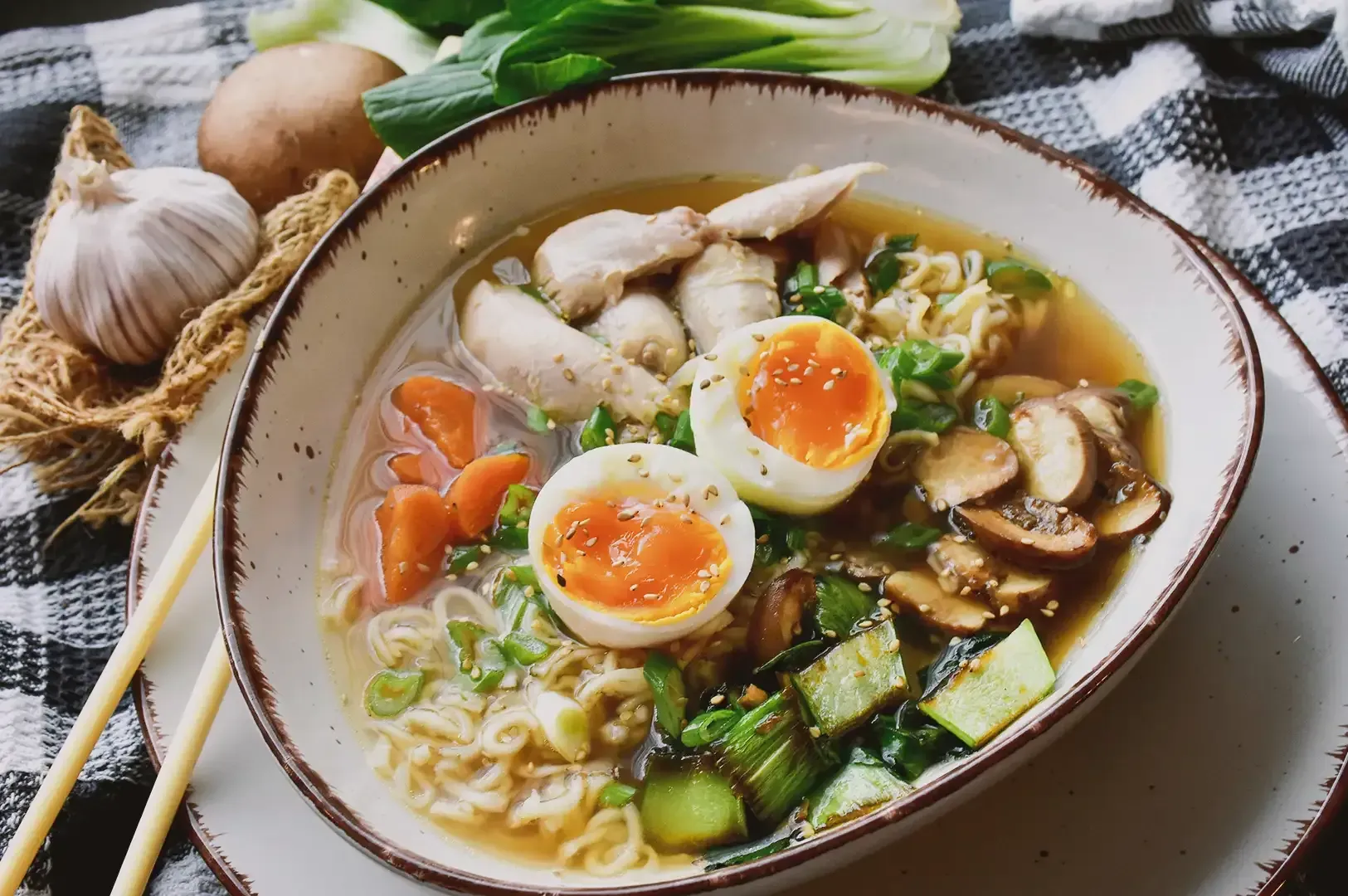
Here's how I put together a vegetarian ramen noodle bowl at home. It takes about 30 minutes, and most of that is chopping.
Step 1: Make a Simple Miso Broth
Heat vegetable broth in a pot over medium heat with grated garlic and ginger. Add sliced shiitake mushrooms and simmer for about 10 minutes. In a small bowl, whisk a spoonful of white miso paste with a ladle of the warm broth until smooth, then stir it back into the pot. Season with a splash of soy sauce to taste.
Don't let the broth boil hard once the miso is in. Keep it at a gentle simmer so the flavor stays round and mellow.
Step 2: Prep and Cook Your Vegetables
Blanch baby bok choy and snow peas in boiling water for about a minute, then lift them out with a slotted spoon. Sauté carrots, cabbage, or corn kernels in a little avocado oil over medium-high heat for one to two minutes. Season lightly with soy sauce.
Step 3: Cook Your Ramen Noodles Separately
Cook the traditional noodles in a separate pot of boiling water according to the package instructions. Drain them well. Cooking noodles separately keeps the extra starch out of your broth and stops the noodles from going mushy.
Step 4: Assemble and Serve Immediately
Put the noodles in your bowl, ladle over the hot miso broth, then arrange your vegetables on top in little groups. Finish with scallions, toasted sesame seeds, a drizzle of toasted sesame oil, and garlic chili sauce if you like heat.
Want more protein? Add pan-fried tofu, shelled edamame, or a soft boiled egg if you eat eggs. Serve immediately, because ramen waits for no one.
Turning Instant Ramen Into Vegetable Ramen
No time for broth? I get it. This is my go-to shortcut for vegetable ramen on busy nights.
- Heat a little avocado oil in a pan over medium heat.
- Add cabbage cut into squares and thinly sliced carrots. Stir-fry for about a minute.
- Season with salt, white pepper, and a small splash of soy sauce. Toss in scallions.
- For a glossy finish, stir in a slurry of potato starch or cornstarch mixed with water and let it thicken slightly.
- Finish with sesame oil, then cover to keep warm.
- Make your instant ramen according to the package instructions, divide it into bowls, and top with the cooked veggies.
It's affordable, quick, and far more satisfying than plain noodles..
Common Vegetarian Ramen Mistakes to Avoid
I've made all of these, so please learn from me.
Adding too many watery vegetables directly to the soup can soften their texture and slightly change the broth’s concentration. Cook heartier vegetables separately when you want more control over texture and flavour
Overcooking the greens. Bok choy and spinach turn limp and dull fast. Blanch them briefly, and if you're prepping ahead, plunge them into ice water to keep them bright.
Using the same texture for everything. A bowl full of soft vegetables feels heavy. Always add something crunchy, like bean sprouts or snow peas.
Under-seasoning a vegetable broth. Veggie broth alone can taste thin. Miso paste, soy sauce, garlic, ginger, and shiitake mushrooms all build depth. Taste and adjust before you serve.
Letting greens wilt in the fridge. Leafy greens don't last long, especially in Singapore's humidity. Buy them close to when you plan to cook, wrap them in a dry paper towel, and store them in the crisper drawer.
Frequently Asked Questions
What vegetables go best in ramen?
I think baby bok choy, shiitake mushrooms, scallions, bean sprouts, and corn kernels are the best place to start. They cover leafy, earthy, fresh, crunchy, and sweet in one bowl.
Can I add vegetables to instant ramen?
Absolutely. Stir-fry them lightly in a pan with a little seasoning, then place them on top of the cooked traditional noodles. That keeps the broth from tasting diluted.
Should vegetables be cooked before adding to ramen?
It depends on the vegetable. Hearty ones like carrots, cabbage, and broccoli taste best cooked first. Delicate ones like baby spinach and bean sprouts can go in raw, since the hot broth softens them.
What can I use instead of ramen noodles?
Soba noodles make a good swap and pair nicely with the same vegetables and miso broth.
Your Next Bowl Starts in the Vegetable Drawer
Here's my honest advice: don't overthink it. Start with three vegetables you already like, mix one cooked with one raw, and finish with scallions and toasted sesame seeds. That alone will make a big difference.
Once that feels easy, start experimenting. Try lotus root, a different mushroom, or a new sauce. The best vegetables for ramen are the ones that make you excited to cook again tomorrow.
So grab a bunch of bok choy on your next grocery run and get your pot going. Your best bowl of vegetable ramen might be just 30 minutes away.
If you try this great recipe, please leave your required recipe ratings and comment something about your experience. Your review recipe helps others discover this delicious dish and improve their own bowls.
Enjoy your ramen adventure!
For a deep dive on healthier and nutricious Ramen options, visit this artcle on How Vegan Ramen Is Redefining Singapore’s Noodle Culture
Recent Posts