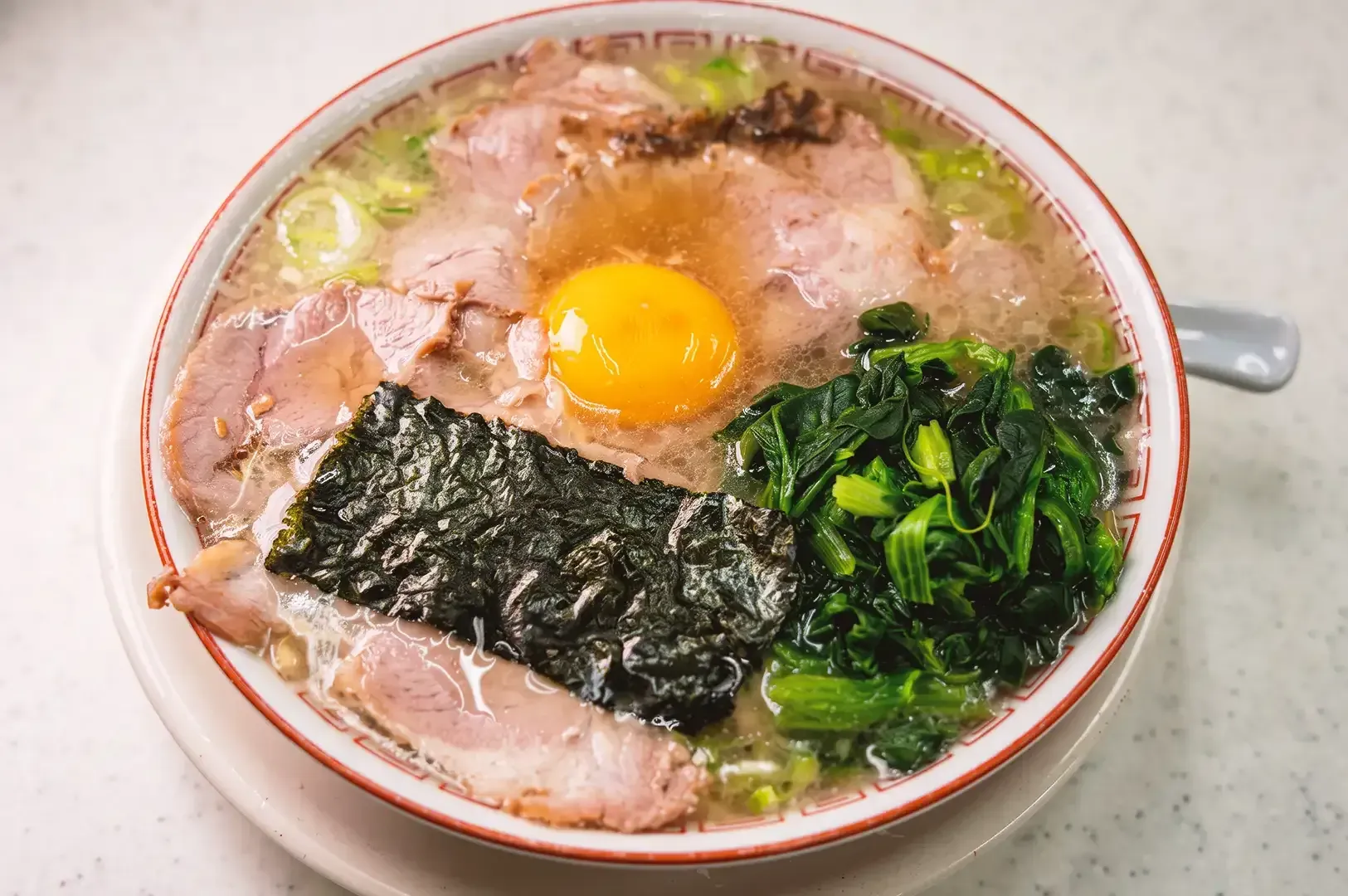
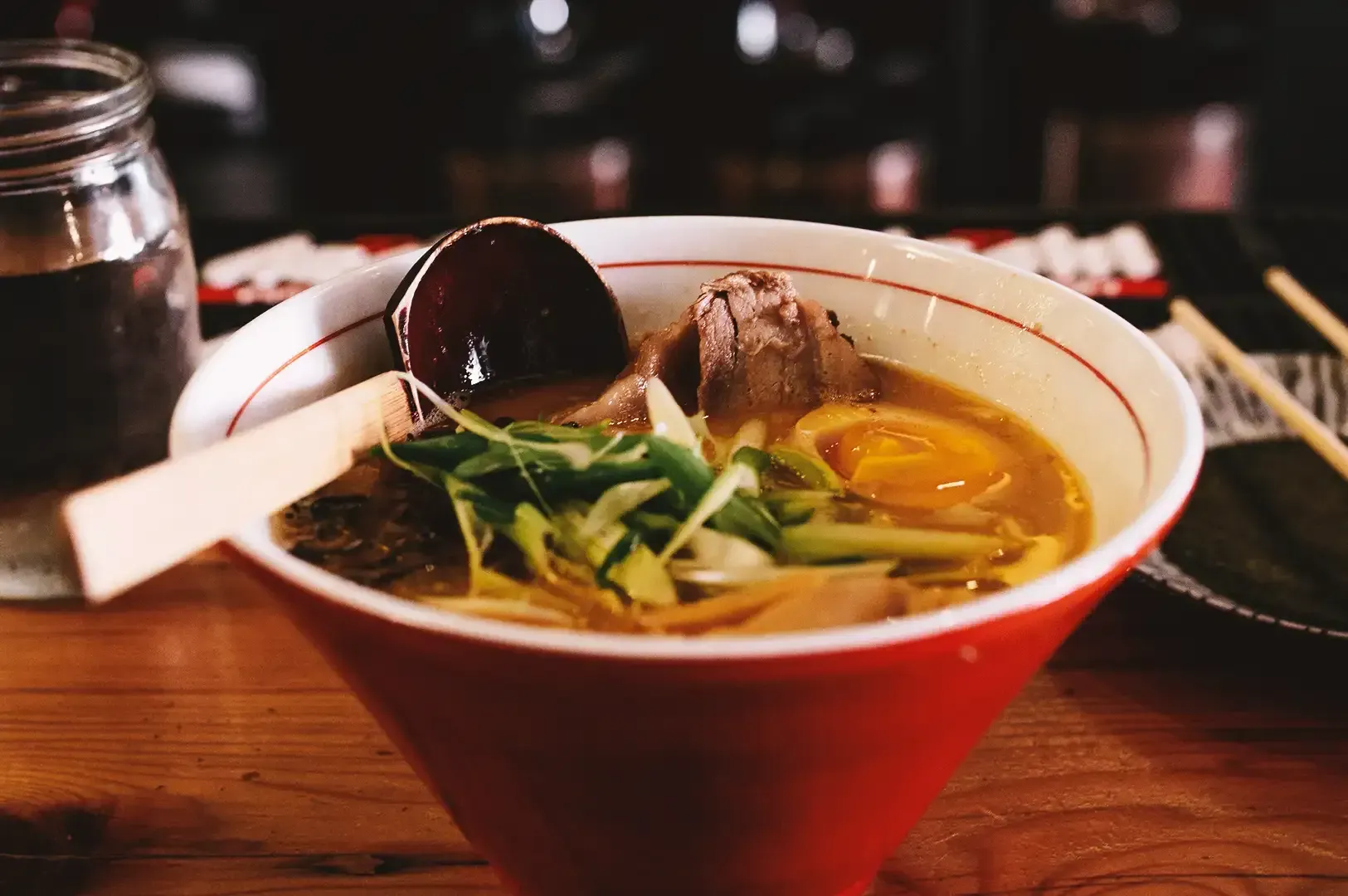
The bowl is nearly empty. A few strands of noodle cling to the bottom, a stray ring of green onion drifts near the rim, and there's just enough broth left for one more spoonful. You lift it, and for a second everything else goes quiet.
That last bite is easy to rush. I think it might be the most honest moment of the whole meal.
The first sip of ramen is built to impress. It's hot, fragrant, and loud with flavor. Almost any bowl can win you over at the start. The real question is whether it can keep you there.
By the end, a lot has changed. The noodles have been sitting in hot broth, softening as they go. The soup has cooled a little, and as it does, its salt and fat can feel more pronounced. Toppings have given up their juices or lost their crunch. Your appetite has shifted too. What felt generous at the first slurp might feel heavy by the twentieth.
So when I reach the bottom, I'm really asking something simple: do I still want this?
Sometimes the answer is an easy yes. The broth tastes as good now as it did at the start, maybe better, because I've gotten to know it. The noodles still have some spring. The portion ran out at the moment my hunger did. That's a bowl that worked. It didn't need every part to be perfect. The parts just had to keep supporting each other all the way down.
Other times, the last bite feels like a chore. The richness that thrilled me early on has turned cloying. The noodles have gone soft. I'm finishing out of habit rather than pleasure. That doesn't make it a bad bowl. It might simply have been built for a shorter conversation than I gave it.
I don't think there's a single rule here. A thick, indulgent tonkotsu and a delicate shio are designed to land differently, and so are we. A finish that feels like too much to me might feel like pure comfort to you. Appetite, mood, and even the weather all play a part.
What I've come to appreciate is that the last bite holds the whole bowl inside it. It carries every choice the kitchen made and every slurp you took along the way.
So next time, slow down at the bottom. Notice whether you're reaching for that final mouthful or pushing through it. The first bite tells you what a bowl promised. The last one tells you whether it kept its word.