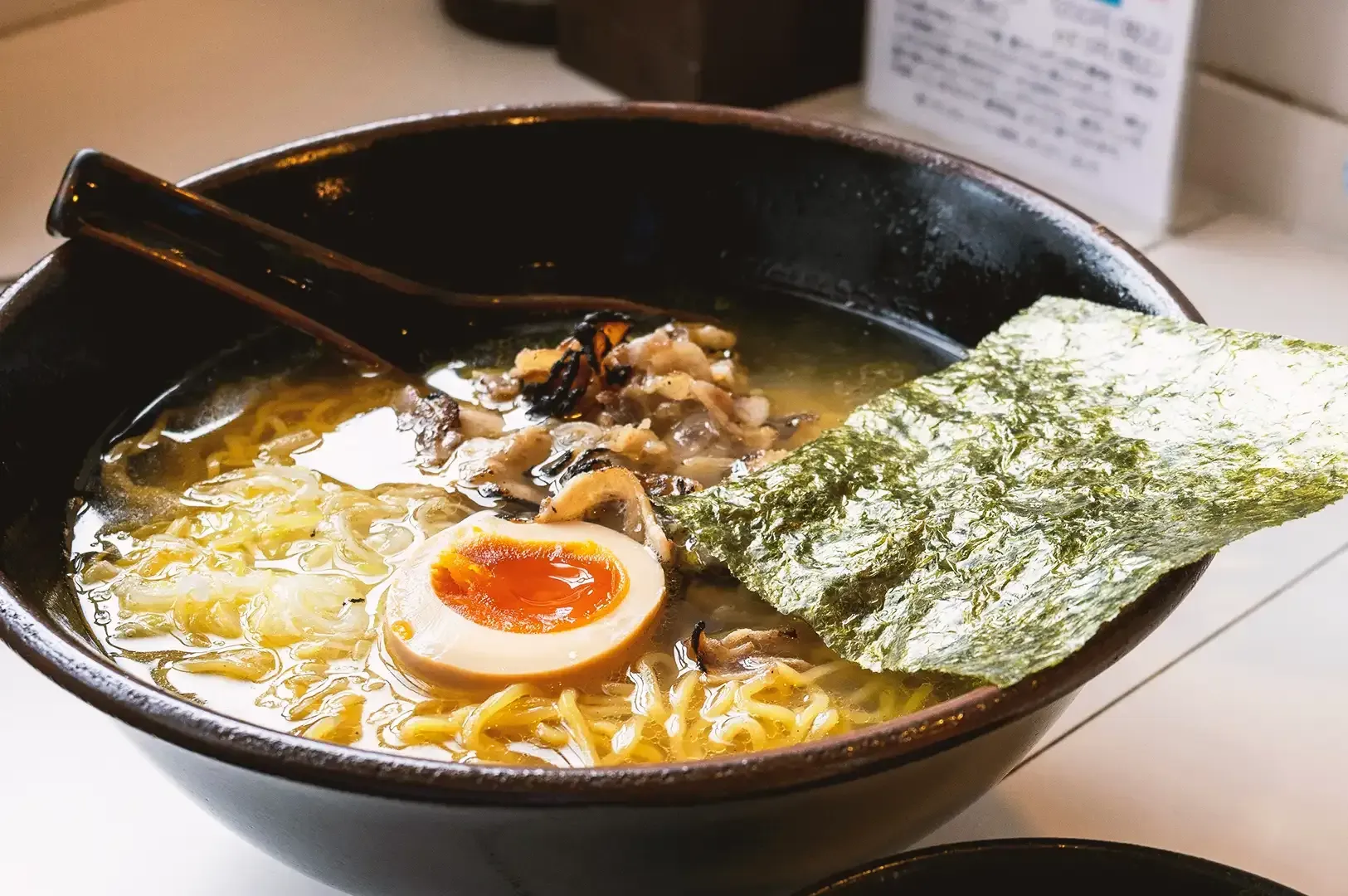
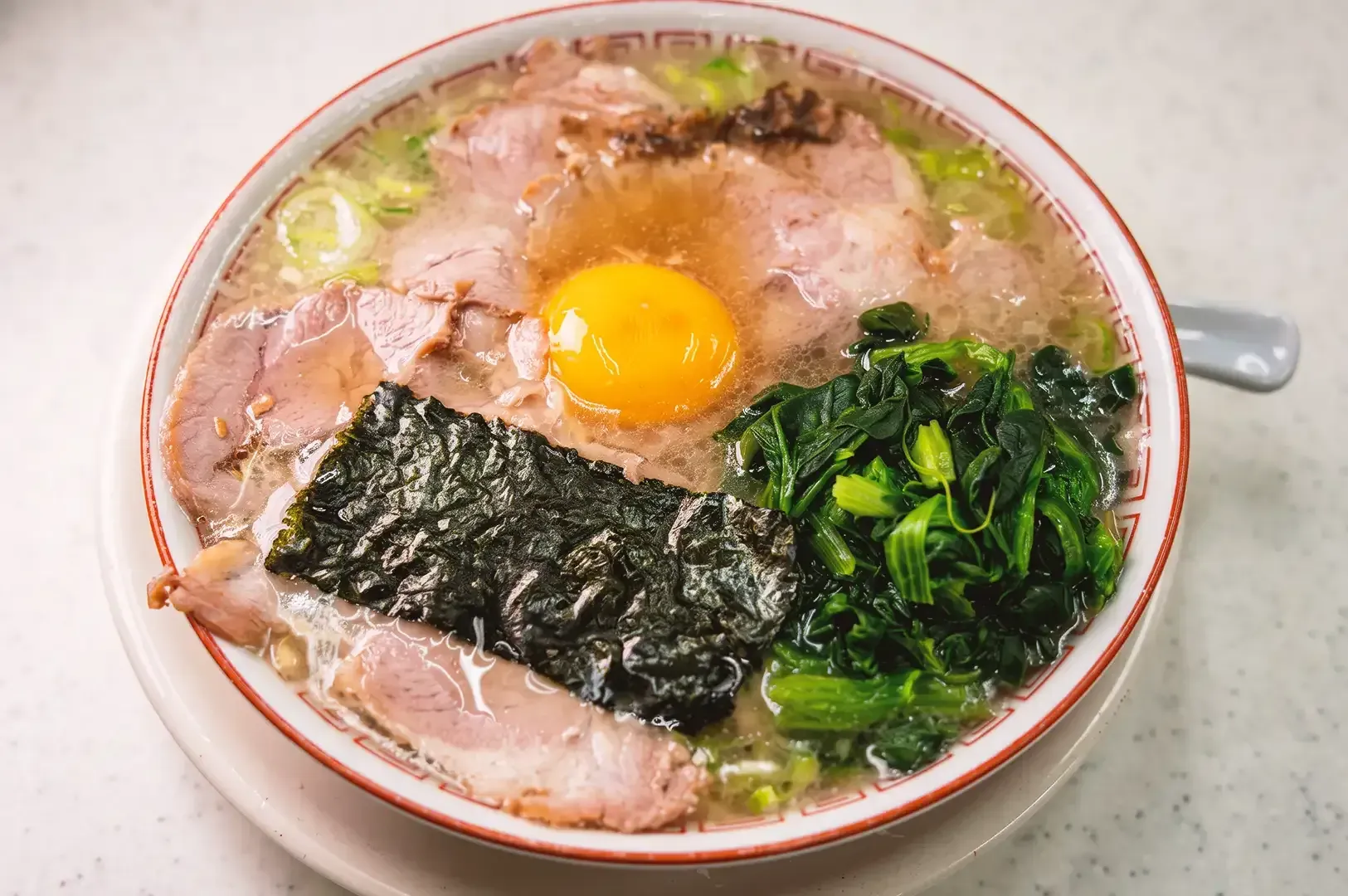
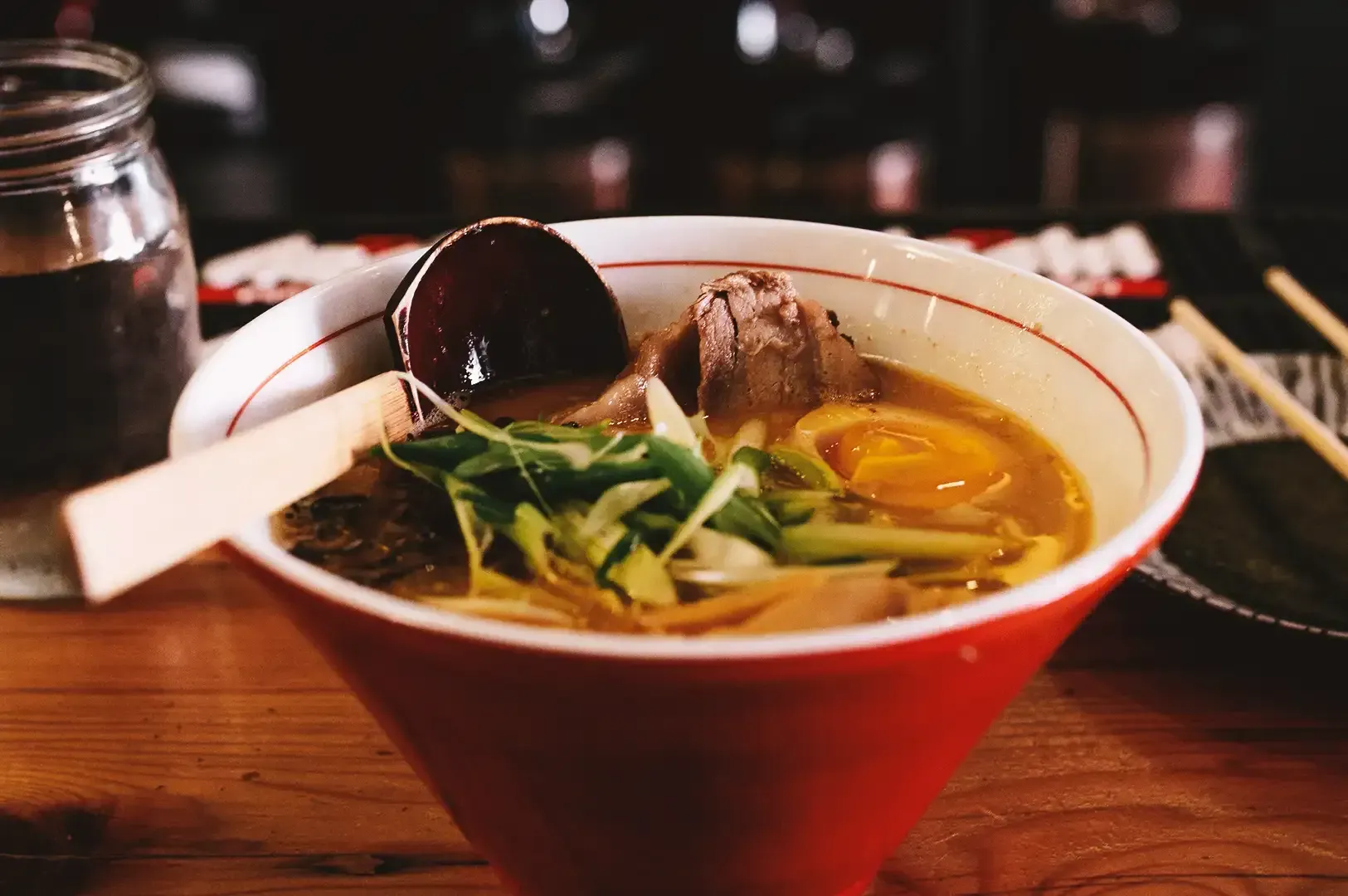
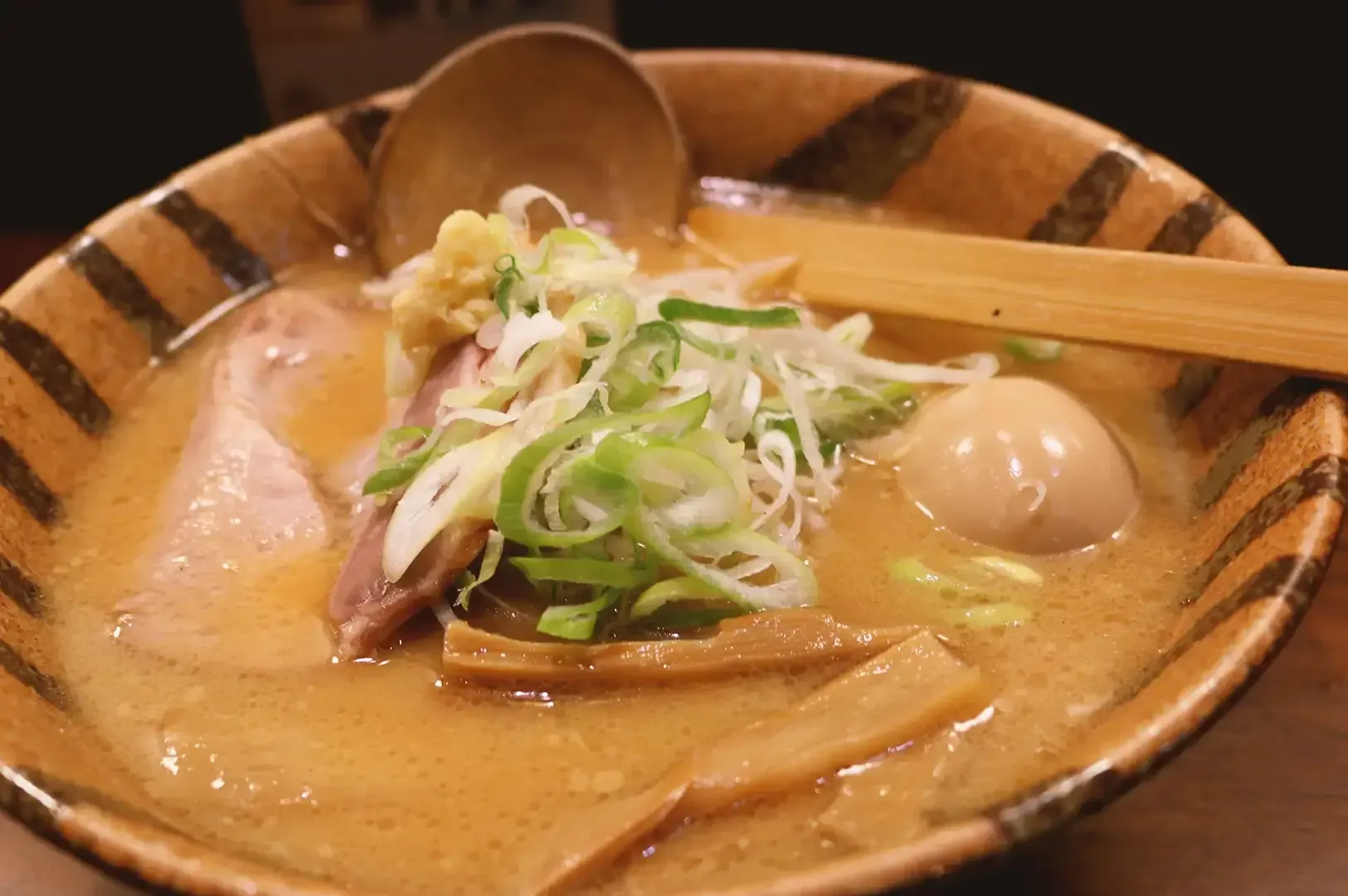
Picture the bowl. A cloudy, ivory broth that coats the spoon. A slice of torched chashu curling at the edges. A halved egg with a molten, amber yolk. A few strands of spring onion for colour. It's beautiful, and I've noticed it's also the bowl I see almost everywhere.
I love that bowl. That's the uncomfortable part.
When I scroll through my feed, the ramen that travels furthest tends to look the same: thick, creamy, glossy, photographed from above with chopsticks lifting a tangle of noodles into the light.
Rich tonkotsu, often with a spicy variation. It's comforting to look at and even more comforting to eat. But I sometimes wonder whether we've started to confuse "photogenic" with "good".
We may be training ourselves to want only one kind of pleasure. Heavy, fatty, salty, immediate. It hits hard on the first sip, and by the third it can blur into a single note. Meanwhile, the quieter bowls sit on the menu, half-read. A clear shio broth that smells faintly of the sea. A chicken-based soup that tastes clean and lingers gently. A tsukemen where the noodles carry the dish. These ask for a little patience, and I'll admit I don't always give it.
I can't blame restaurants for reading the room. Running a restaurant here is hard enough, and a kitchen that serves what sells is simply surviving. If most of us order the same creamy bowl, it makes sense to perfect that bowl and quietly drop the experiment nobody chose. Our habits become their business plan.
That's where I have to include myself. I know the pull of the safe option. Faced with something unfamiliar, I'm often tempted to point at what I already know. It's easier, and when you're tired and hungry, easy can feel like kindness to yourself. But every safe order is a small vote, and small votes add up.
I don't think the answer is to give up the bowls we love. Comfort matters. I just wonder what our ramen scene might become if more of us left a little room for surprise: one visit in three spent on the bowl we'd usually skip, a question for the staff about what they're proudest of, a willingness to be mildly disappointed now and then.
Maybe the next exciting bowl in Singapore is already on a menu somewhere, waiting for someone curious enough to order it. I'd like that someone to be me. Perhaps it could be you, too.