A Bowl That Slowly Changes As You Eat

May 27, 2026
Dot Icon

There is a quiet rhythm to eating Japanese soup curry. When the bowl first arrives at my table, it is a landscape of vibrant colors suspended in a dark, golden broth. The steam rising from the surface carries the immediate, sharp aroma of toasted cumin and coriander. But the true beauty of this dish lies in how it refuses to stay the same. It is a meal that evolves with every single minute that passes.


Vegetables are absolutely essential to the bowl. In my experience, they do so much more than decorate the surface. Their presence feels intentional in every way, each one offering its own natural sweetness, texture contrast, aroma, and a steady, thoughtful development of the broth as the meal stretches on. When seasonal vegetables are chosen with care and cooked just enough to maintain their character, they silently shape the entire eating experience.


At the first spoonful, the broth is hot and surprisingly clear. A good soup curry never feels heavy, flat, or oily. Instead, it offers a deep, savory foundation that balances the natural sweetness of caramelized onions with a layered, intricate heat.


The spice does not attack your palate all at once. It blooms slowly, warming the back of my throat while leaving a remarkably clean aftertaste. This careful spice management is exactly what makes me reach for the next bite without feeling overwhelmed.

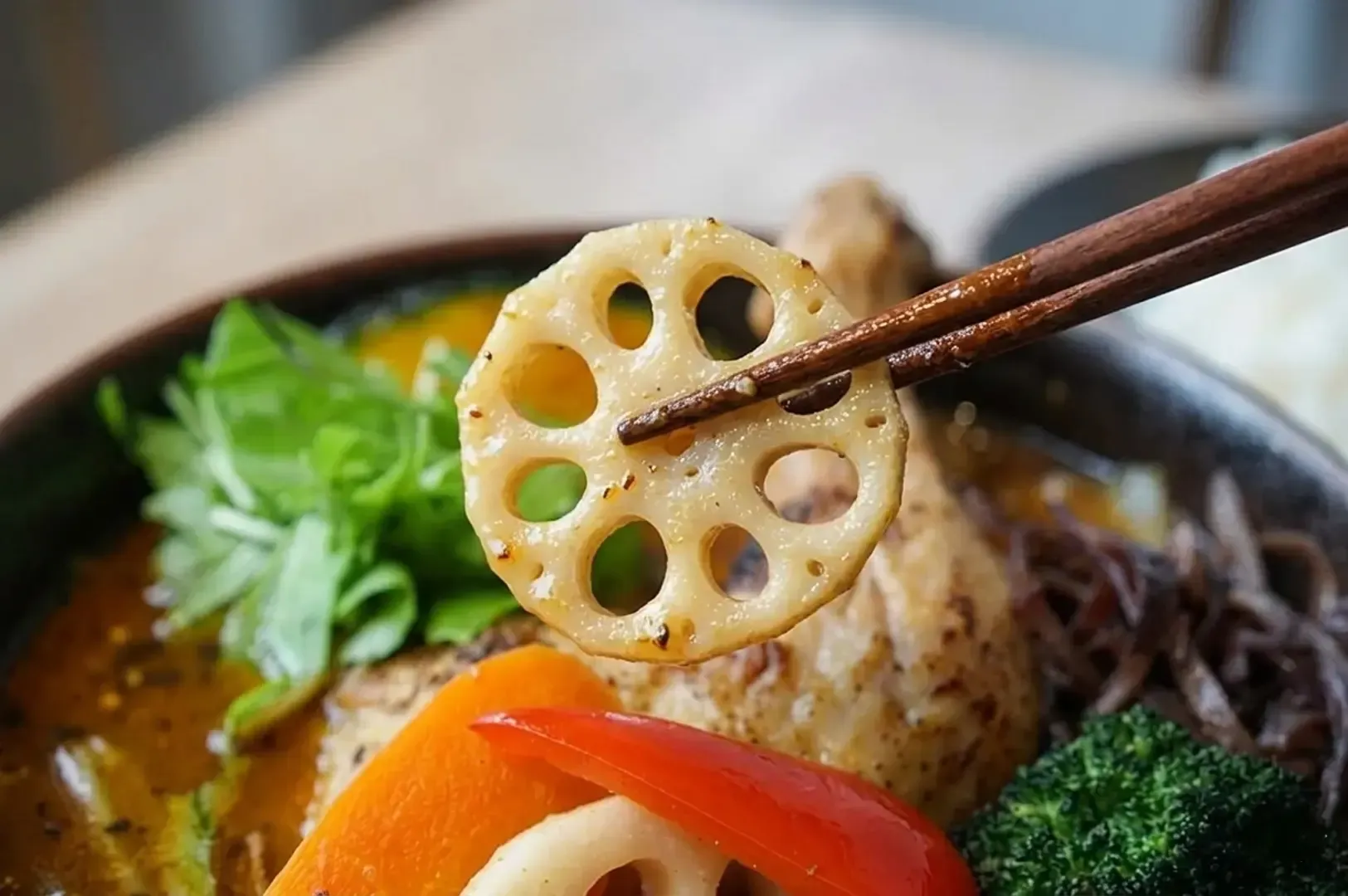
Close-up of wooden chopsticks holding a slice of lotus root over a bowl of Japanese soup curry with chicken and vegetables blurred in the background

As I work my way through the bowl, the ingredients begin to tell their own stories. Vegetables like lotus root and pumpkin show true care from the kitchen and bring unique texture contrast, lotus root with its satisfying crunch, fried pumpkin offering a soft, starchy sweetness that deepens as it soaks up the broth. I find that the fresh, bright aroma from selected herbs or lemon can lift the whole dish.


The tender chicken on the bone slowly yields, shedding its richness into the surrounding soup, but it is the structure and intention behind the vegetables that helps the broth develop, absorb, and reveal new flavors with every bite.


By the time I reach the bottom of the bowl, the liquid has completely transformed. It is richer and heavier, infused with the starches of the vegetables and the savory juices of the meat. Eating soup curry is not just about consuming a quick dinner.


It is an exercise in pacing, ingredient balance, and observation, a thoughtful experience that rewards you for paying attention from the very first sip to the lingering warmth of the last.

Recent Posts

A bowl of Japanese ramen topped with spring onions, meat and egg
By Chloe C.L August 28, 2026
A first-person ramen taste test proving rich, heavy ramen can still feel clean when built on balance, not grease.
Ajisen Ramen store in Singapore
By Jillian Garzia August 27, 2026
An honest Ajisen Ramen review in Singapore. Classic, Volcano, and Nankotsu bowls tasted. Does this affordable old favourite still deliver today?
Ramen shop in Japan
By Best Ramen Team August 26, 2026
A calm look at ramen authenticity: does a bowl need to taste Japanese, or can respect and craft make it just as real?
Top view of miso ramen
By Chloe C.L August 24, 2026
Discover how fermented soybeans, koji, and miso broth come together in miso ramen, plus why the noodles usually contain no miso at all.
People taking photos in line outside a glowing ramen shop, with a hot bowl of ramen.
By Jillian Garzia August 21, 2026
A reflective look at what fades when ramen turns trendy: patience, craft, individuality, and the people behind every bowl.
Chopsticks lifting ramen noodles from a steaming white bowl on a light wood table.
By Jillian Garzia August 20, 2026
An honest Hototogisu Ramen review in Singapore. Oyster paitan and shio broth, tasted slowly. Does this seafood ramen earn its Michelin name?